Creatine is one of the most researched and widely used supplements in sports nutrition. Whether your goal is to build muscle, increase strength, improve workout performance, or support athletic training, creatine has consistently demonstrated its effectiveness through decades of scientific research.
However, one question continues to come up among beginners and experienced athletes alike: How much creatine should you take daily? As creatine supplementation continues to grow in popularity, consumers can now find creatine in various formats, including powders, capsules, and creatine power gummies, making it easier than ever to incorporate into a daily routine.
The good news is that creatine dosing is relatively simple. Most people can achieve excellent results with a consistent daily intake, and there is no need for complicated supplementation protocols.
In this guide, we’ll explain recommended creatine dosages, discuss loading phases, and help you determine the best creatine intake strategy for your fitness goals.
What Is Creatine?
Creatine is a naturally occurring compound produced by the body and stored primarily in muscle tissue.
It is synthesized from three amino acids:
-
Arginine
-
Glycine
-
Methionine
Creatine can also be obtained through foods such as:
-
Beef
-
Pork
-
Salmon
-
Tuna
-
Herring
Inside muscles, creatine helps support the production of adenosine triphosphate (ATP), which serves as the body’s primary source of energy during high-intensity exercise.
Because ATP stores are limited, creatine helps replenish energy more efficiently during demanding physical activities.
Why Does Creatine Dosage Matter?
Creatine works by increasing muscle creatine stores.
To experience the benefits of supplementation, your muscles need to maintain sufficient creatine levels.
Proper dosing helps support:
-
Strength development
-
Power output
-
Exercise performance
-
Training capacity
-
Muscle growth
Taking too little may slow the process of reaching optimal creatine stores, while taking significantly more than necessary generally provides little additional benefit.
Recommended Daily Creatine Dosage
For most healthy adults, research supports a maintenance dose of:
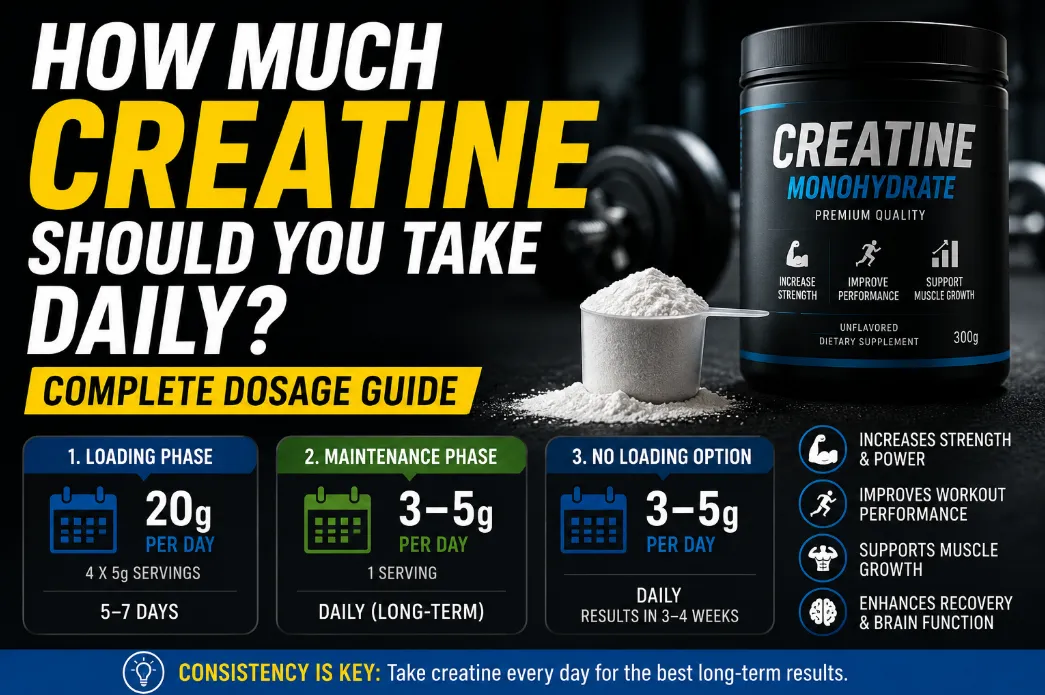
3–5 Grams Per Day
This amount is sufficient for most individuals to maintain elevated muscle creatine stores over time.
Many sports nutrition experts recommend:
-
3 grams daily for smaller individuals
-
5 grams daily for larger individuals or athletes
Consistency is far more important than taking excessive amounts.
Creatine Loading Phase: Is It Necessary?
Many creatine users follow a loading phase to increase muscle creatine stores more rapidly.
Typical Loading Protocol
A common loading strategy involves:
20 grams per day
Divided into:
-
Four servings of 5 grams
For approximately:
5–7 days
After loading, users transition to a maintenance dose of:
3–5 grams daily
Benefits of Loading
Potential advantages include:
-
Faster muscle saturation
-
Quicker onset of creatine-related benefits
Is Loading Required?
No.
Many individuals skip the loading phase entirely and simply consume:
3–5 grams daily
Although saturation takes longer, research shows this approach ultimately achieves similar muscle creatine levels.
Daily Creatine Dosage by Goal
For Muscle Growth
Recommended intake:
3–5 grams daily
Combined with:
-
Resistance training
-
Adequate protein intake
-
Consistent nutrition
For Strength Training
Recommended intake:
3–5 grams daily
Many powerlifters and strength athletes use this dosage year-round.
For Athletic Performance
Athletes participating in:
-
Football
-
Basketball
-
Soccer
-
Sprinting
-
CrossFit
often consume:
3–5 grams daily
to support high-intensity training.
For General Fitness
Recreational gym-goers typically achieve excellent results with:
3–5 grams daily
without requiring specialized protocols.
Should Bigger Athletes Take More Creatine?
Body size can influence creatine requirements.
Individuals with greater muscle mass may benefit from slightly higher intakes.
Examples include:
Average Adults
-
3–5 grams daily
Larger Athletes
-
5 grams daily
Competitive Bodybuilders
Some may consume slightly more, although research suggests benefits generally plateau once muscle stores are saturated.
When Should You Take Creatine?
Many people worry about timing.
Fortunately, research suggests that daily consistency matters more than the exact time of consumption.
Common options include:
Before Workout
Popular among athletes who prefer pre-training supplementation.
After Workout
Frequently paired with post-workout nutrition.
With Meals
Some individuals take creatine alongside breakfast, lunch, or dinner.
Any Time of Day
The most important factor is maintaining daily intake.
Do You Need Creatine Every Day?
Yes.
Creatine works by maintaining elevated muscle creatine stores.
For best results, supplementation should continue on:
-
Training days
-
Rest days
-
Recovery days
Skipping multiple days may gradually reduce creatine levels over time.
Creatine Dosage by Supplement Type
Creatine Monohydrate Powder
Most products provide:
-
5 grams per scoop
Creatine Capsules
Capsules vary significantly.
Always check:
-
Serving size
-
Total creatine content
Creatine Gummies
Gummy products often provide smaller amounts per serving.
Consumers should verify:
-
Creatine content per gummy
-
Number of gummies required to reach 3–5 grams daily
Creatine HCL
Manufacturers may recommend smaller serving sizes due to formulation differences.
Always follow product-specific instructions.
What Happens If You Take Too Much Creatine?
Creatine is generally well tolerated when used according to label directions.
Taking significantly more than recommended does not necessarily produce better results.
Potential issues may include:
-
Stomach discomfort
-
Digestive upset
-
Unnecessary supplement expense
Once muscle creatine stores become saturated, additional intake offers limited advantages.
Common Creatine Dosage Mistakes
Inconsistent Use
Missing doses frequently may reduce effectiveness.
Under-Dosing
Taking less than recommended may slow muscle saturation.
Over-Dosing
More creatine does not automatically mean better results.
Ignoring Product Labels
Different supplement formats contain varying amounts of creatine.
Always verify serving information.
Frequently Asked Questions
How Much Creatine Should I Take Daily?
Most healthy adults benefit from 3–5 grams of creatine per day.
Is 5 Grams of Creatine Enough?
Yes. Five grams daily is the most commonly recommended maintenance dose.
Do I Need a Loading Phase?
No. Loading is optional. Consuming 3–5 grams daily will eventually produce similar results.
Should I Take Creatine on Rest Days?
Yes. Consistent daily intake helps maintain muscle creatine stores.
Can Beginners Take Creatine?
Absolutely. Creatine is commonly used by both beginners and experienced athletes.
Daily Creatine Dosage Summary
|
Goal |
Recommended Daily Intake |
|
General Fitness |
3–5 grams |
|
Muscle Growth |
3–5 grams |
|
Strength Training |
3–5 grams |
|
Athletic Performance |
3–5 grams |
|
Larger Athletes |
Up to 5 grams |
For most individuals, this simple guideline provides all the creatine needed to support training goals.
Final Thoughts
If you’re wondering how much creatine you should take daily, the answer is surprisingly straightforward. For the vast majority of people, 3–5 grams of creatine per day is enough to support strength, muscle growth, exercise performance, and athletic development.
While loading phases can help saturate muscles more quickly, they are not required. Consistency remains the most important factor. Whether you choose creatine powder, capsules, or gummies, maintaining a regular daily intake will help ensure your muscles have the creatine stores needed to support high-intensity training and long-term fitness progress.
By following proven dosage recommendations and staying consistent, you can maximize the benefits of one of the most effective and scientifically supported supplements available today.