Technology has played a crucial role in advancing space exploration and expanding humanity’s understanding of the universe. From the launch of the first artificial satellites to modern missions exploring distant planets, technological innovations have made it possible to study space in ways that were once unimaginable. As scientific knowledge and engineering capabilities continue to grow, technology remains the driving force behind future space exploration efforts.
One of the most important contributions of technology to space exploration is spacecraft development. Modern spacecraft are equipped with advanced navigation systems, communication devices, and scientific instruments that allow them to travel vast distances and collect valuable data. These technologies enable scientists to study planets, moons, asteroids, and other celestial bodies with remarkable accuracy.
Satellite technology has transformed communication, weather forecasting, navigation, and environmental monitoring on Earth. Satellites orbiting the planet provide critical information that supports daily activities, disaster management, and scientific research. Their success demonstrates the practical benefits of space technology for society.
Robotic exploration has become a major component of modern space missions. Robots and rovers are used to explore environments that are too dangerous or distant for human astronauts. These machines can collect thoi tiet tphcm , capture images, and conduct scientific experiments on other planets, providing valuable insights into the conditions of the universe.
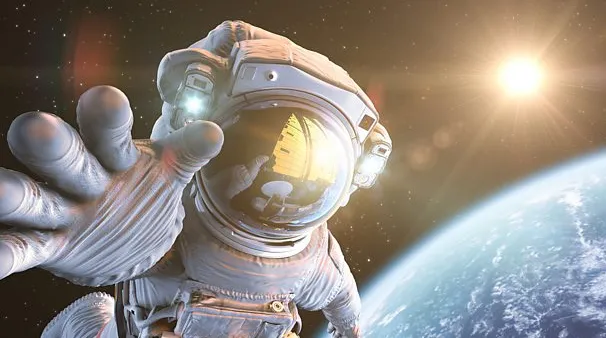
Technology has also improved human space travel. Advanced life-support systems, protective equipment, and space station technologies allow astronauts to live and work in space for extended periods. Ongoing research aims to develop safer and more efficient methods for future missions to the Moon, Mars, and beyond.
Artificial intelligence and data analysis play an increasingly important role in space exploration. AI systems help process large amounts of scientific data, assist in navigation, and support mission planning. These technologies improve efficiency and help researchers make important discoveries more quickly.
Despite its many achievements, space exploration technology faces significant challenges. High development costs, technical risks, harsh space environments, and long mission durations require continuous innovation and international cooperation. Scientists and engineers must overcome these obstacles to achieve future exploration thời tiết thành phố cao lãnh .
In conclusion, technology is the foundation of modern space exploration. It enables spacecraft development, satellite operations, robotic missions, human spaceflight, and scientific discovery. As technology continues to advance, it will open new opportunities for exploring the universe and expanding humanity’s knowledge beyond Earth.