Bali is small on a map and surprisingly large in real life. Traffic is slow, distances feel longer than they look, and every area has its own personality. That is why choosing where to stay is the biggest single decision in planning a honeymoon on the island: it decides what your days feel like before you have booked a single excursion. Jungle or ocean, lively or silent, walkable or remote.
If you only have a minute, this table covers the six areas couples consider most often.
|
Area |
The mood |
Best for |
Think twice if |
|---|---|---|---|
|
Ubud |
Rice fields, river valleys, culture, morning mist |
Food, walks, jungle villas with private pools |
You want a beach nearby (it’s about an hour away) |
|
Uluwatu / Bukit |
Limestone cliffs, surf, huge sunsets |
Scenery, beach days, memorable dinners |
You dislike stairs or want everything walkable |
|
Nusa Dua |
Manicured resort enclave, calm reef-protected water |
Easy swimming, full-service resorts, short airport drive |
You want local character |
|
Seminyak / Canggu |
Beach clubs, boutiques, cafés, energy |
Nightlife, shopping, restaurant choice |
You want peace and quiet |
|
Sanur |
Long seafront path, gentle water, slow pace |
Sunrise walks, cycling, boats to the Nusa islands |
You want drama or a lively evening scene |
|
East Bali (Sidemen, Amed) |
Valleys under Mount Agung, black sand, fishing villages |
Feeling far from everything, snorkelling |
You only have a week |
Now for the nuance a table can’t hold.
Ubud is the cultural heart of Bali, with dance performances every evening, galleries, craft villages and some of the best restaurants on the island. It is also where you find those villas with a private pool hanging over the jungle, which is about as romantic as Bali gets. The trick is to stay slightly outside the centre. Sayan, Kedewatan and the countryside around Tegallalang are quieter and have better views, while the town is still a short drive away.
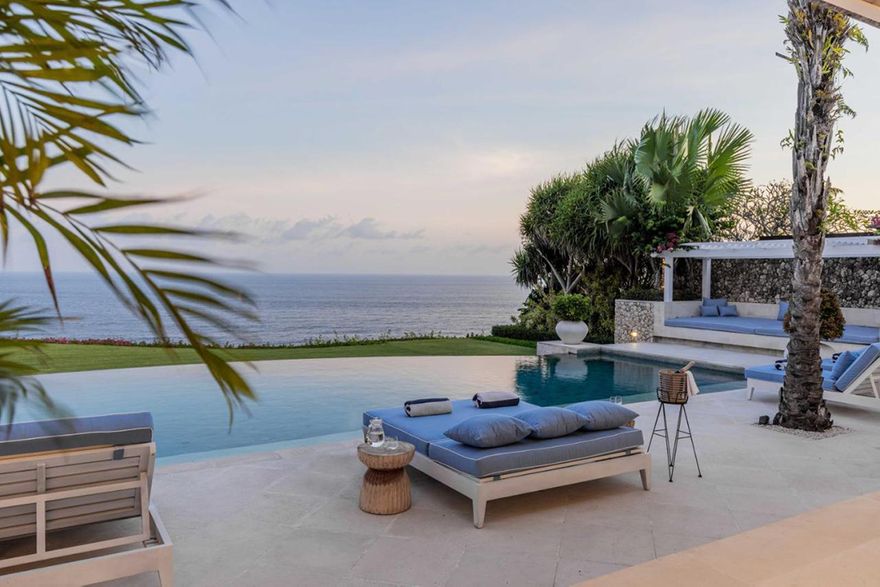
Uluwatu and the rest of the Bukit peninsula are home to many of the island’s most luxurious clifftop resorts. The beaches, among them Melasti, Bingin and Padang Padang, are some of the prettiest in Bali, but many are reached by long staircases down the cliff. The area is spread out, so you will lean on drivers. In exchange, you get sunsets that are genuinely hard to forget.
Nusa Dua is the opposite of adventurous, and that is the point. A planned resort zone with wide sandy beaches and calm water, it is ideal for couples who want easy swimming and no logistics at all. The downside is that it can feel like it could be anywhere in the tropics.
Seminyak and Canggu are the social side of the island. Seminyak is more polished, Canggu more laid-back and trend-driven. Great for couples who want to go out, less great if traffic and noise bother you. The beaches here are better for sunsets and surfing than for swimming.
Sanur is Bali’s gentle old-timer: a long beachfront path, shallow water, a mix of older hotels and new boutique places, and the departure point for boats to Nusa Penida and Nusa Lembongan. Peaceful, practical, not very dramatic.
East Bali is where the island still feels far away. Rice valleys in Sidemen, black-sand beaches and some of the best snorkelling in Amed, very little development. It works beautifully as a third stop on a longer trip, but the drive from the airport is long, so it is hard to justify on a seven-night honeymoon.
Budget varies by area too. Ubud and Seminyak have the widest spread, from simple guesthouses to some of the island’s best villas. Uluwatu and Nusa Dua lean upmarket, with many large resorts and fewer cheap options near the cliffs. Sanur and east Bali tend to offer the best value for a comfortable, quiet stay. If you want one splurge, spend it on the area where you plan to stay longest, since that is the view you will wake up to most often.
Two areas are better than one
Most couples end up happiest splitting their stay. The classic is Ubud followed by Uluwatu: jungle first, then cliffs and beaches. A gentler version swaps Uluwatu for Nusa Dua and its easy swimming. For longer trips, Sidemen, Sanur and a few nights on Nusa Lembongan make a quieter circuit. Couples who want some nightlife often pair Seminyak with Ubud. As a rule, put the busier area first and the calmer one last, so the trip winds down rather than up.
Keep travel times in mind when you plan the switch. Roughly, allow an hour to an hour and a half between Ubud and Seminyak or Sanur, about two hours between Ubud and Uluwatu, and two and a half to three hours from the south to Sidemen or Amed. Late-afternoon traffic, especially around the airport, can stretch all of these. Moving between areas takes up most of a morning or afternoon, so treat it as part of a lazy day with a lunch stop rather than squeezing it between excursions. If your flight home leaves at night, spend the last night within easy reach of the airport.
There is also the villa-or-resort question. Villas give you privacy and your own pool, often with staff; resorts give you restaurants, a spa and activities on site. Many couples mix the two, a villa for one half and a resort for the other, which adds variety without adding driving.
Once the areas are chosen, the rest of the planning falls into place quite naturally. If you’d like to see how area combinations are usually packaged, with sample nights per location and room types, there are ready-made honeymoon itineraries at 7.holiday/bali-honeymoon-packages that work well as a starting point for your own dates.
There is no single best area in Bali. There is only the one that matches the honeymoon you both have in mind.